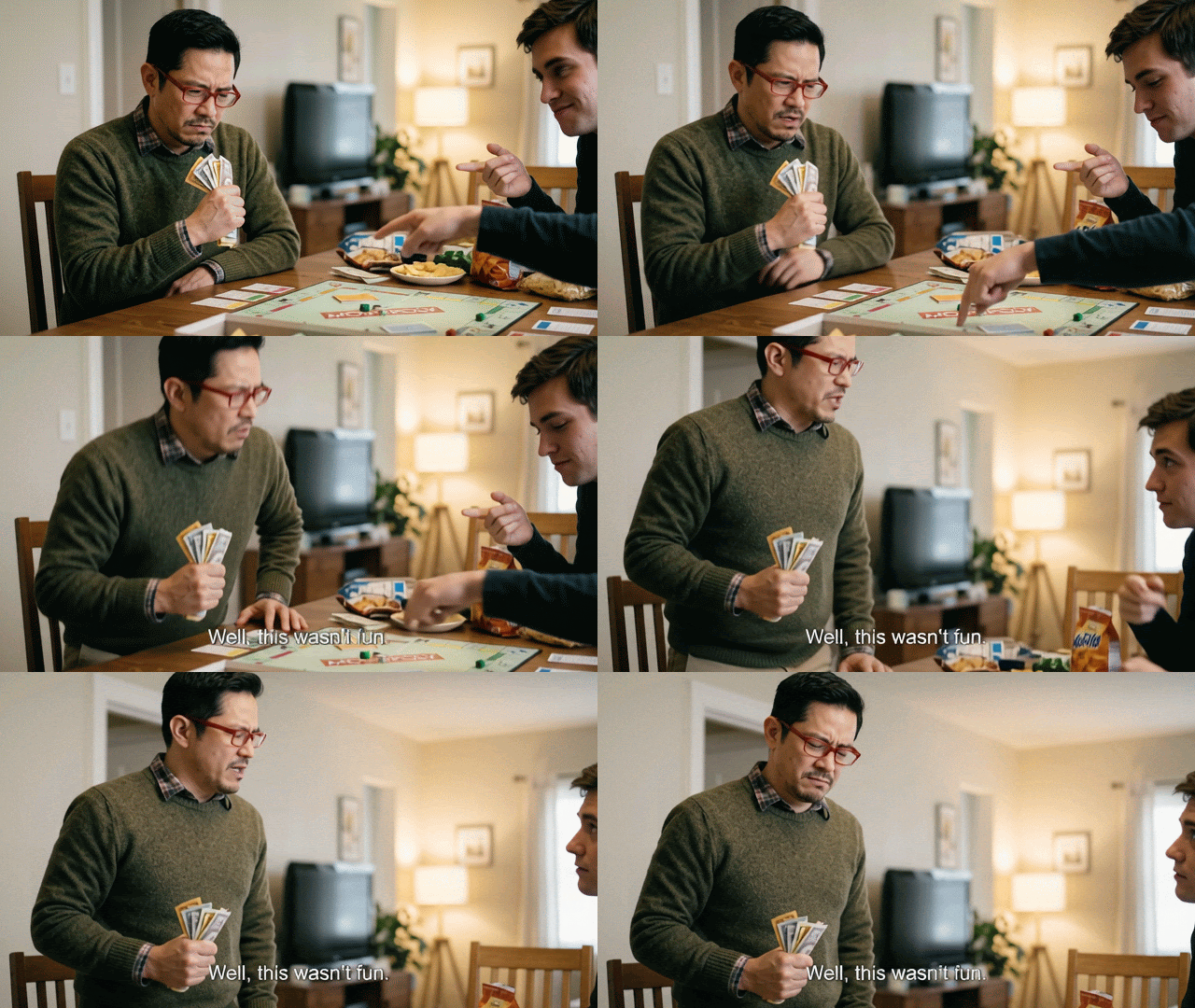

Monopoly gets so much hate today largely because modern tabletop design has completely transformed what players expect from a game.
In 1903, designer Elizabeth Magie created The Landlord’s Game—Monopoly’s direct ancestor—not as light family entertainment, but as an anti-monopolist teaching tool demonstrating how unchecked rent-seeking concentrates wealth and crushes everyone else. The misery, bankruptcy, and helplessness players feel aren’t a design bug; they were the original moral lesson.
This goes against what games are supposed to be: fun. This game is designed to let one person—the “runaway leader”—have all the fun while everyone else struggles. If this is meant to be a life lesson, no thank you. We already know! I don’t need to play a game to remind me I wasn’t born with a silver spoon in my mouth.
As a game designer, I will also say that the mechanics are either flawed or outright bullshit:
- No catch-up mechanics. As mentioned above, once there is a clear runaway leader, they snowball and crush everyone else trying to move up.
- Painfully slow elimination. Building on that point, the road to eliminating someone is so slow that it punishes every player far longer than it should. Going bankrupt takes forever. It’s a slow, painful death that turns you into a monster you aren’t supposed to be—a greedy, green-eyed one. No wonder people say this game ruins friendships and tears families apart!
- Zero player agency. Dice rolling? That’s the kind of RNG that thrives in great games because it adds a layer of calculated risk and actually lets players catch up. However, there is zero player agency in Monopoly’s dice rolling. You’re expected to roll and blindly accept whatever number you get. Now, imagine rolling two dice and having the agency to choose either die or their combined total to move your token. That single tweak could make the game marginally playable—except we’ve already covered all the other reasons this game belongs in the bin.
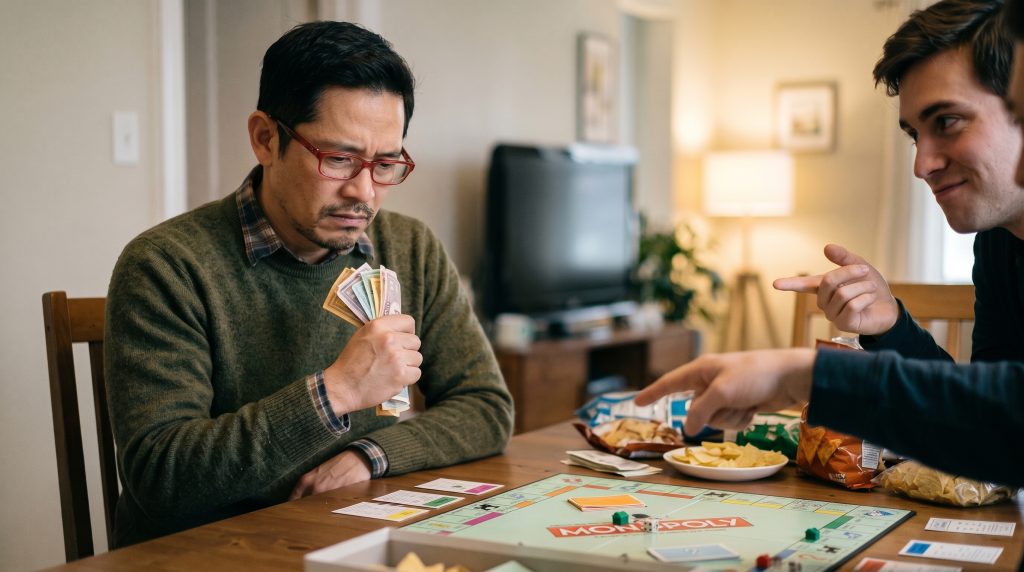
“Well, if those rules suck so much for you, why don’t you just use house rules?”
Fair point, except the designers have allowed house-ruling to run wild—and the way people play it “wrong” (like changing how properties are sold or putting tax money on Free Parking) actually makes the game longer! Refer back to my earlier point: why drag out the suffering?
Because psychologically, it gives the losing players a false sense of hope. And that, my friend, seals my opinion about this game. That’s exactly what monopolies, oligarchies, and ruling parties have been doing all along: running away with your money while playing games to make you believe you still have a shot, even though the system is rigged for those at the top of the food chain. Everyone starting at the same line is just an illusion—until you wake up from your hopes and dreams into reality.