🧠 Part I: The DM’s Burden
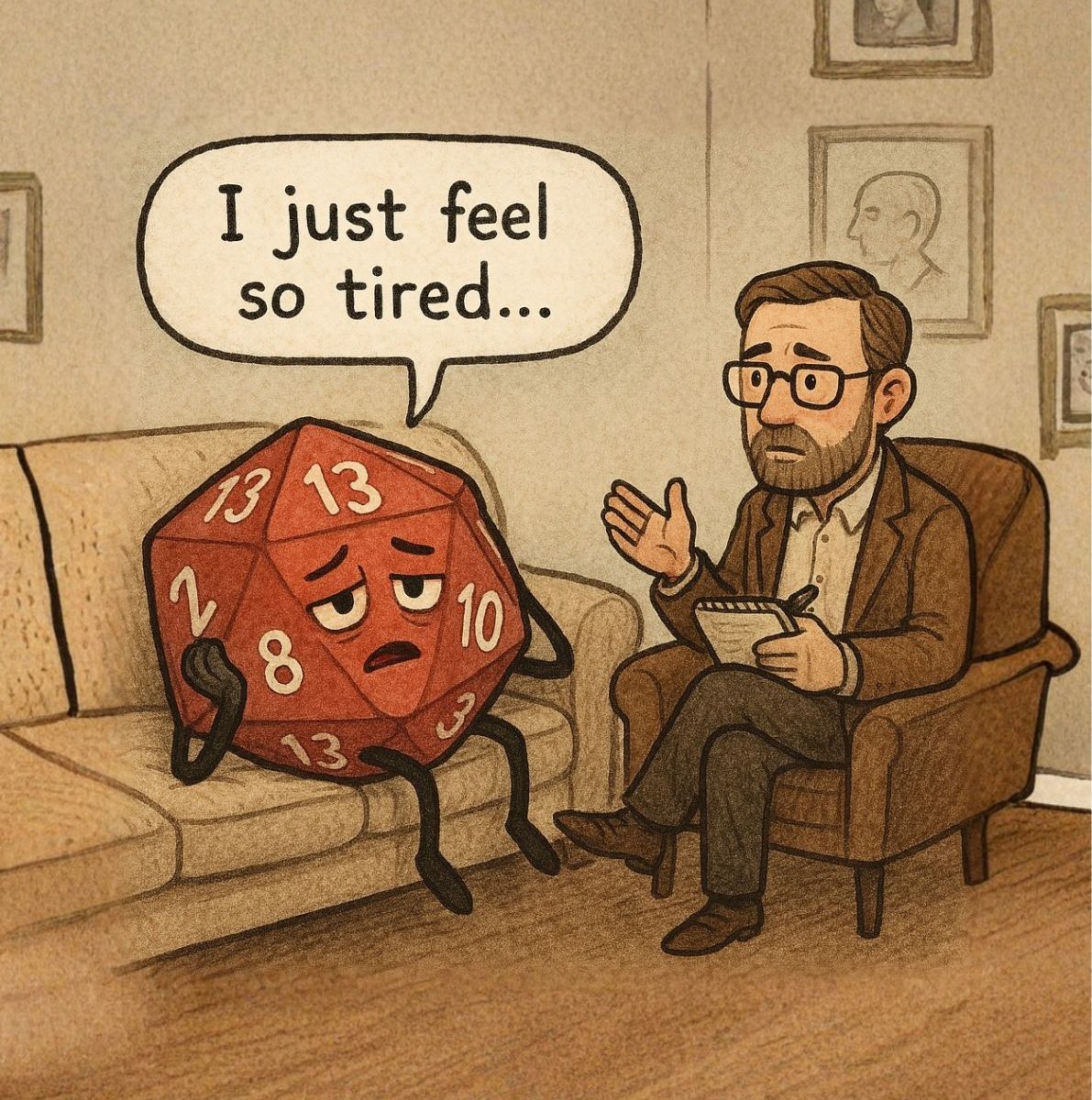
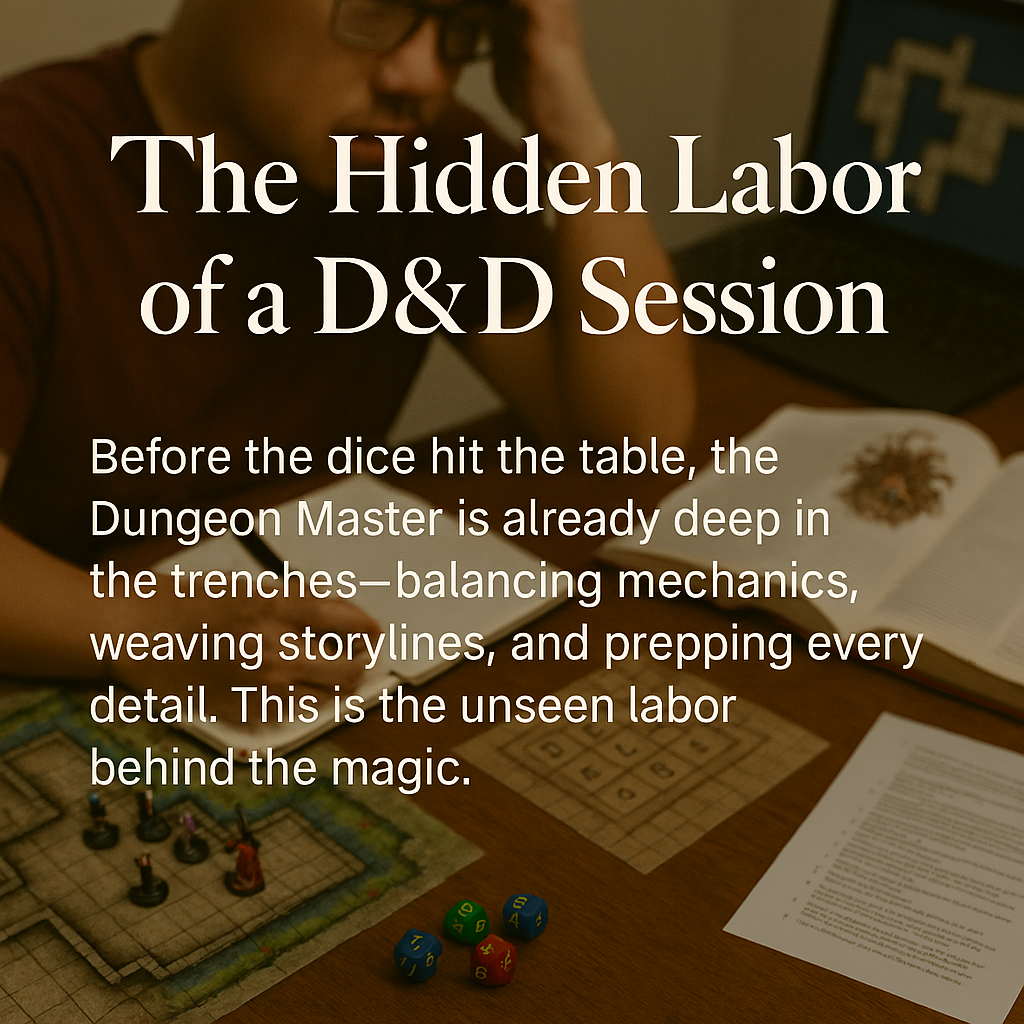
Before the dice hit the table, the Dungeon Master is already deep in the trenches. Long before players arrive with their character sheets and snacks, the DM has spent hours—sometimes days—preparing an experience that feels seamless, immersive, and fun. It’s easy to forget that what looks like spontaneous storytelling is actually the result of meticulous planning, balancing mechanics, and weaving narrative threads into something meaningful.
Yes, AI tools have made some parts of this process easier. They can suggest monsters, generate maps, or spit out riddles. But they can’t understand your party’s dynamics, their emotional arcs, or the subtle callbacks that make a campaign feel personal. The DM still has to do the heavy lifting—curating, adapting, and refining every element to fit the group’s unique story. That’s not just prep. That’s creative labor.
🧩 Part II: What DMs Actually Do
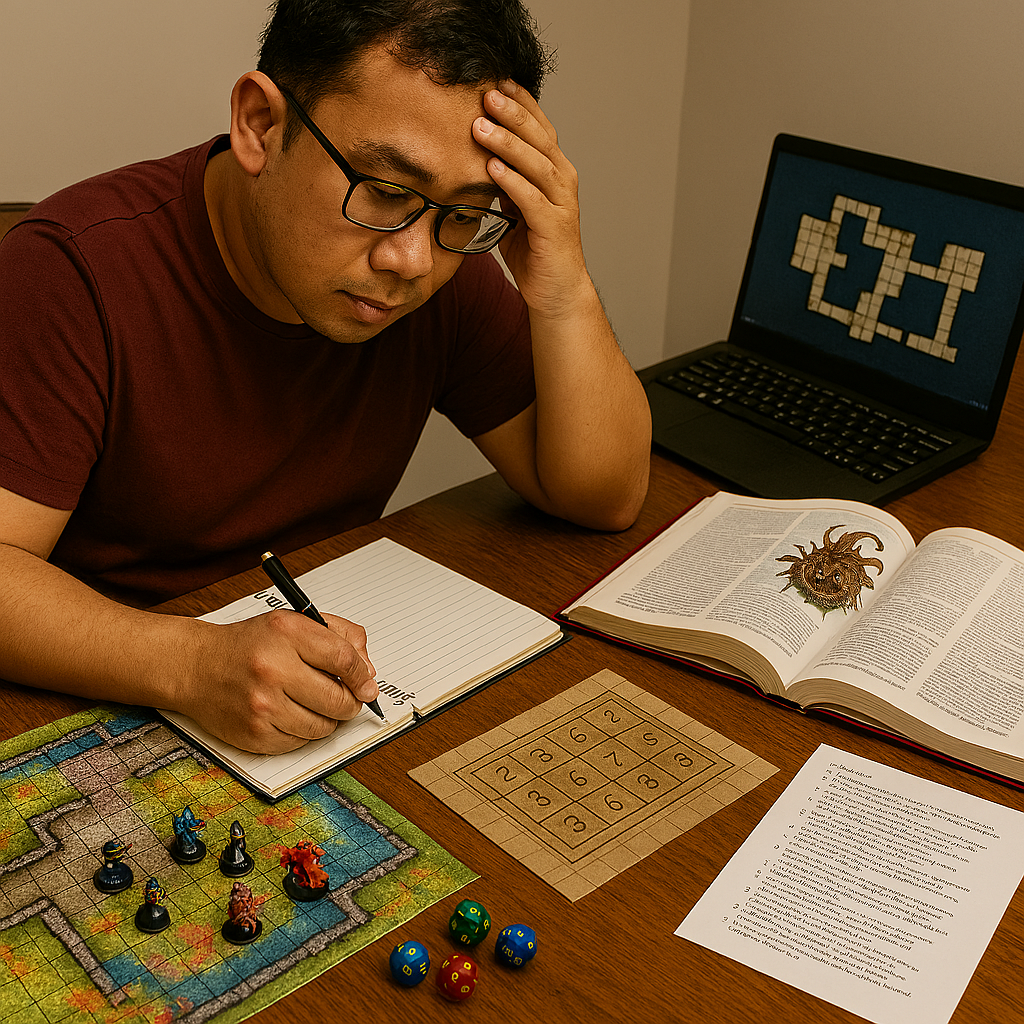
Running a session isn’t just about throwing monsters at players and watching the dice roll. It’s about crafting an adventure that’s challenging but fair, exciting but coherent. The DM must ensure that every encounter is appropriate for the party’s level and abilities. They have to anticipate how spells, feats, and personalities will interact—and adjust accordingly. AI can offer templates, but only the DM knows what will actually work at their table.
Then there’s the story. Even the most beautifully generated dungeon is useless if it doesn’t fit the campaign’s arc. The DM has to stitch new content into existing plotlines, maintain continuity, and make sure character motivations still make sense. It’s not just about worldbuilding—it’s about emotional investment.
And let’s not forget the visual prep. Whether it’s printing maps, painting minis, or setting up digital assets, these tasks take time. They’re often done late at night, after work, in between life’s other responsibilities. Even puzzles and riddles—those delightful moments of player ingenuity—require careful crafting to match the party’s style and avoid derailing the session.
🎭 Part III: Respecting the Effort
Players show up to play. DMs show up having already worked. That’s the truth. And while most players are grateful, it’s easy to underestimate just how much effort goes into making a session run smoothly. A player’s prep might take minutes. A DM’s prep takes hours. That gap deserves recognition.
Players can support their DMs in ways that are simple, meaningful, and already widely practiced across real gaming tables. Many groups chip in a small amount each session—sometimes just the cost of a coffee or a meal—to acknowledge the DM’s prep time and the materials they purchase. Others rotate responsibilities, with players taking turns bringing snacks, hosting at their homes, or helping set up terrain and maps before the game starts. Some players gift their DM something thoughtful, like a new set of dice, a miniature of the DM’s favourite monster, or a book from their wishlist—gestures that countless DMs online say made them feel genuinely appreciated. In some long-running campaigns, players have even pooled funds to buy their DM a premium VTT subscription or a hardcover rulebook as a thank-you for months of effort. These aren’t grand gestures; they’re acts of recognition that say, “We see the work you put in, and we value it.”
Keep the hobby alive, lift each other up, and may everyone have good rolls ahead. 🎲✨
#WhyNotWednesday